
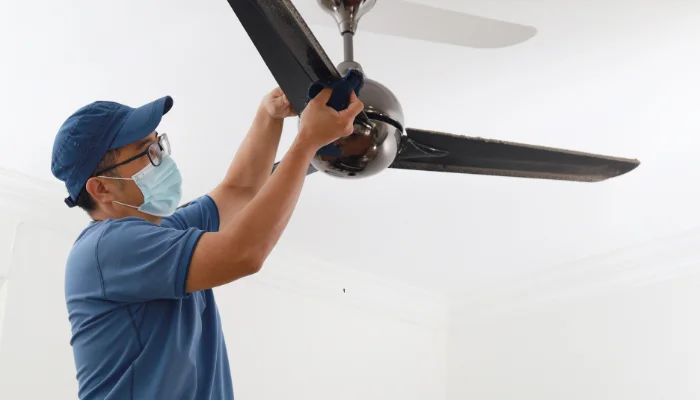
Fans get dusty very quickly due to the continuous movement of their blades in the air that draws dust in and causes it to settle on the surfaces. Learning how to clean a fan increases the airflow in the home, cuts down on dust circulation, and keeps your residence more comfortable.
Top Tier Cleaners has solutions for those property owners in need of larger cleaning jobs, providing professional cleaning for residential and commercial properties. But routine cleaning of the fans can often be easily done with simple tools and the proper method.
The best way to clean a fan varies in approach depending on the type, location, and amount of dust on the fan. A good cleaning procedure helps to keep the appliance safe and to help maintain good indoor cleanliness.
How to Clean a Fan Step-by-Step
| Step | Area / Task | Recommended Tools | Cleaning Method | Key Tip |
| Preparation | Gather cleaning supplies | Microfiber cloth, soft brush, vacuum attachment, mild cleaning solution, ladder | Keep all tools ready before starting | Always switch off and unplug the fan first |
| Step 1 | Remove loose dust | Vacuum attachment | Vacuum dust from blades, grills, and nearby surfaces | Remove dry dust before using moisture |
| Step 2 | Clean corners and tight areas | Soft brush | Gently loosen trapped dust and debris | Avoid using excessive force |
| Step 2 | Wipe smooth surfaces | Microfiber cloth | Wipe remaining surface dust | Useful when learning how to clean a dusty fan |
| Step 4 | Clean fan blades | Damp microfiber cloth | Wipe both sides of each blade, then dry completely | The best way to clean fan blades is to clean gently to avoid affecting balance |
| Ceiling Fan | Blades | Microfiber cloth | Wipe each blade individually | Use a stable ladder for high ceiling fans |
| Tower Fan | Outer panels | Cloth and soft brush | Remove and clean panels where manufacturer instructions allow | Avoid forcing panels open |
| Exhaust Fan | Grill and vents | Brush, vacuum, cloth | Remove dust buildup from the grill and surrounding area | Pay extra attention to accumulated grease and dust |
Cleaning Different Types of Fans
Tower fans are designed with a large vent where they can catch the dust inside the fan body. Properly cleaning tower fan models consists of following the manufacturer’s instructions before removing panels.
Kitchen and bathroom fans should be reviewed and treated because moisture and grease can cause deposition of a greater buildup. Cleaning the exhaust fan occasionally allows for proper ventilation.
Common Fan Cleaning Mistakes
Avoid these problems:
- Cleaning while the fan is running
- Spraying liquid directly into motor areas
- Using harsh chemicals
- Ignoring hidden dust behind covers
- Forgetting to dry components
For larger properties, professional options like Commercial Cleaning Services may help maintain frequently used areas.
Fan Maintenance Tips for Long-Term Performance
Following simple habits can reduce future buildup:
- Dust fans regularly
- Keep surrounding areas clean
- Check unusual noises
- Clean vents periodically
- Inspect moving parts
These fan maintenance tips help extend fan life and maintain better performance.
For deeper household maintenance, services such as Deep cleaning can address areas where dust accumulates over time.
When Professional Cleaning Is Useful
Professional assistance may be helpful when:
- Fans are installed at difficult heights
- Multiple rooms require cleaning
- Heavy grease or dirt buildup exists
- Businesses need scheduled maintenance
A professional ceiling fan cleaning service can safely handle hard-to-reach fixtures.
Final Statement
Understanding the proper way to clean a fan will make it easier to regulate air, dust, and the comfort level within the home. Correct use of suitable cleaning equipment will ensure fans are not clogged and function properly.
Routine maintenance, coupled with services such as House Cleaning and Best Office Cleaning Service, makes for a cleaner environment overall for complete property care.
A basic cleaning schedule helps prolong fan utility and minimizes extreme maintenance in the future.