
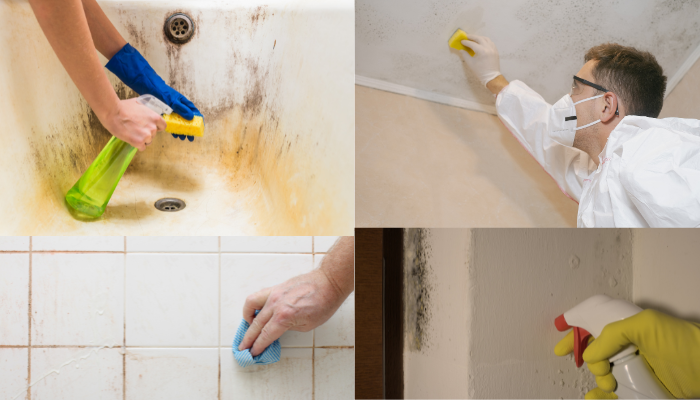
How do you clean mould in a proper way while maintaining surface integrity and avoiding health issues? Some of these will be removed with detergent and water from hard, impervious surfaces and dried, unless the stain is extremely extensive. However, it is important that larger infestations and mould growth in areas are handled professionally.
Whilst Top Tier Cleaners might help to keep areas clean, ordinary cleaning will not be an adequate substitute for specialist remediation and will not replace this service.
How Do You Clean Mould Step by Step?
First you should find out where the water came from and then proceed with mold removal. Recurring growth happens with leaking water pipes, condensation and bad ventilation.
If the damage is in a small area, do the following:
- Protective equipment: Respirator (N95), protective gloves, goggles with face seal only.
- Air circulation: Open the windows as much as possible but protect from dust.
- Make the detergent solution: Dilute in a mild household detergent and water.
- Take care to clean thoroughly: Scrub the washable, hard surfaces and get rid of any visible growth.
- Dry thoroughly: Dry out moisture as soon as possible and fix any leaks.
In general, the EPA considers the DIY cleanup to be appropriate for cleanup areas of less than about 10 square feet, depending on circumstances.
Choosing the Right Mold Cleanup Method
Treatment varies according to materials.
| Surface | Recommended approach |
| Tiles | Detergent and water |
| Glass | Wash and dry |
| Painted drywall | Assess moisture damage |
| Wallpaper | Consider professional removal |
| Carpets | Replace if extensively contaminated |
Don’t mix ammonia or other cleaners with bleach. Not all household moulds of need bleaching for routine cleaning.
Look here for Professional cleaning services!
Can You Remove Mould From Wallpaper?
Avoid using household sprays, removers, etc. to strip mould from wallpaper as this can put it at additional risk of moisture damage.
Contamination can actually penetrate the wallpaper and therefore accumulate beneath the wall surface. Stains or the smell of mould/pungent odors remaining due to soaking can also be indicators of underlying growth.
Avoid over-rubbing or over-soaking. Besides, if the walls are damaged and there is wallpaper below, it may be necessary to get rid of the wallpaper as well.
Routine House cleaning and occasional Deep cleaning may help to maintain general hygiene and it may not be effective in eliminating the formation of mould in building material.
When Is Professional Mould Remediation Necessary?
When contamination exceeds approximately 10 square feet, or following significant flooding, take professional advice from a person trained and experienced in dealing with the situation.
For commercial properties, commercial mold remediation could involve containment, the investigation of moisture, and controlled material removal may be required.
It’s important to note that ordinary Commercial cleaning services and Best Office cleaning services are not specialized remediation services unless explicitly stated.
Final Thoughts
The first step in removing mould is learning how do you clean mould, which comprises management of water, safety measures, and choosing the proper cleaning approaches.
Once professionally cleaned, move-in cleaning will serve to prep areas for reopening. Always check to be sure that the problem with moisture and contamination is cured before returning to normal use.