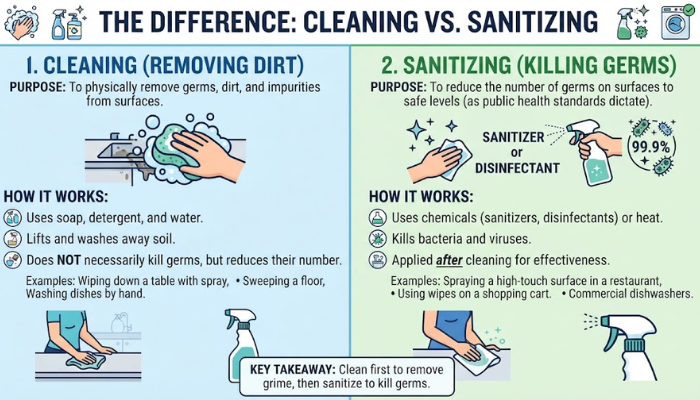
Cleaning does not always reduce germs to a level that public health standards consider safe. Sanitizing will reduce germs to safe level. What is the difference between cleaning and sanitizing? Then what is the difference between cleaning and sanitizing? The difference is the way it works. Sanitizing is not a substitute for cleaning; a dirty surface must be cleaned first and then sanitized.
Professional Cleaning Services in Texas can help develop a cleaning strategy that is consistent for homes, rentals, and shared spaces according to the surface, level of use, and needs of the property.
Cleaning Removes Dirt; Sanitizing Reduces Germs
The difference between cleaning and sanitizing is most significant in kitchens, bathrooms, children’s spaces, and shared high-touch surfaces. Cleaning includes mixing soap or detergent, applying the mixture to the task by scrubbing or wiping with water and physically scrubbing or wiping.
Sanitizing utilizes the correct product to reduce the germs following visible dirt and residue have been removed.
| Task | Main purpose | Typical example |
| Cleaning | Removes soil, residue, and impurities | Wiping a countertop with soap and water |
| Sanitizing | Reduces germs to safer levels | Treating a cleaned food-prep surface |
| Disinfecting | Kills germs listed on the product label | Treating high-touch areas when illness is present |
Follow the Right Sequence
The Right steps for cleaning and sanitizing include removal of gross contamination, cleaning with the detergent listed on the label, rinsing with water if the directions of the product call for it, and applying sanitizer and allowing it to contact the surface for the duration specified on the label. Allow the surface to air-dry as advised in sanitizer instructions.
The correct order for cleaning and sanitizing of equipment or food-contact surfaces is rinse, clean, rinse, sanitize. Cleaning and/or disinfection of food-contact surfaces frequently, and if needed, is one of the most important measures that can be taken against food contamination.
- Follow the following cleaning and sanitising procedures:
- Read the label on the product before mixing and use.
- Don’t use bleach in combination with ammonia or other cleaners.
- Avoid bathroom accessories in food preparation area.
Choose Products for the Job
Cleaning and sanitizing products are not the same as sanitizing solutions. There will be no sanitization where a general-purpose cleaner is used to remove grease. A sanitizer can be used on food-contact surfaces, and a disinfectant can be used on hard, nonporous surfaces for designated germs described on the label. The EPA says sanitizers cannot kill viruses, while disinfectants are sold for the specific purpose of killing viruses and bacteria.
If you are a short-term renter, Airbnb Cleaning and Airbnb Deep Cleaning should not just be one product but link to a surface-specific plan.
Final Words
What is the difference cleaning and sanitizing? Cleaning makes a surface clean; sanitizing eliminates germs on a clean surface. Follow instructions on the order, label, and only disinfect if products permit and/or if necessary. For Move-Out cleaning services or regular House Cleaning, be sure to include kitchens and bathrooms in the services, as well as high-touch surfaces, if available.