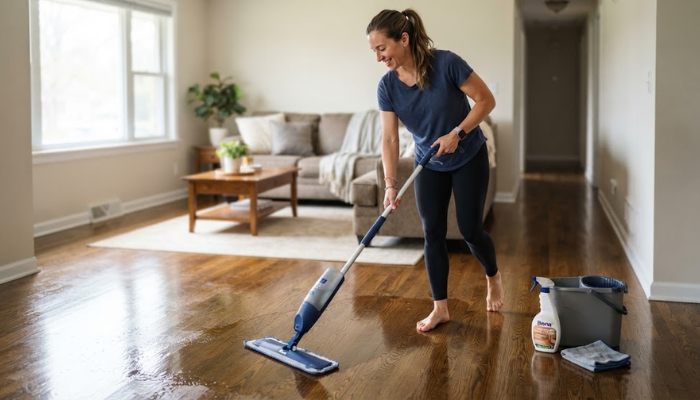
Cleaning hardwood floors is best approached with two clear steps: catching grit dry and spills quickly and cleaning only a bit, rather than a lot, of hardwood cleaner.
Fine dust and sand are abrasive underfoot, and standing water can affect the finish and wood. Additionally, Professional Cleaning Services in Texas can help keep you on a consistent regimen for floor safety when it comes to regular home maintenance.
Start With Dry Cleaning
Use a soft broom, dust mop with a microfiber dry pad, or vacuum with a hard floor attachment and without the beater bar for the hard floor setting. The National Wood Flooring Association recommends sweeping (but does not recommend using any mop or wet cloths) the floor every now and again; dust-mop or have the bare floor dust-mop vacuum, then pick up spills immediately with a dry or slightly damp cloth.
Use a microfiber mop with a hardwood floor cleaner. Spray the product lightly on the pad or on a small area of the floor, rather than soaking it; do not pour it.
| Cleaning need | Safest approach |
| Daily dust and grit | Dry microfiber mop or soft broom |
| Small spill | Dry or barely damp cloth |
| Sticky mark | Manufacturer-approved cleaner and microfiber |
| Persistent haze | Check product residue or finish condition |
Avoid Vinegar and Steam
While many people say cleaning hardwood floors with vinegar is recommended, this is generally not the case for hardwood floors. A hardwood finish can soften and dull over time under the effect of vinegar. Bona and the NWFA (National Wood Flooring Association) both do not recommend putting vinegar on a wood floor.
Cleaning hardwood floors with steam is also dangerous. Water may seep into the openings between boards due to temperature and moisture and may damage the wood and finishing over time. Instead, use a damp, rather than wet, microfiber mop.
Regular pickups of dry debris and minimal use of a manufacturer-recommended pH-neutral floor cleaner are the best thing for cleaning hardwood floors. Do not use any type of bleach, abrasive scrubbers, waxes, oil soaps or a traditional mop and bucket if not approved by your floor manufacturer.
When to Call a Professional
In cases where dust mites or dust remain after safe routine cleaning of your hardwood floor or you see cloudiness, a lot of scratching, cupping, gaps or peeling finish, or water marks reappear regularly, Professional cleaning hardwood floors might be recommended. Cleaning cannot repair a failing finish or moisture problem.
Instead of one solution for every surface, Airbnb cleaning and Deep cleaning should have products suitable to the floor for turnover properties. Before they begin to treat the floor, any hardwood floor cleaning services in Houston must know the nature of the damage, the type of wood flooring, and the finish.
Final Words For Cleaning Floors
What’s Best for Cleaning Hardwood Floors, then? Hardwood floors can handle some moisture, but too much or a too-harsh DIY approach will not be good. Use a dry microfiber mop for timely spill cleanups. Don’t use steam or vinegar unless directed by your flooring manufacturer. If you need to sell or give away a property as a new beginning, consider hiring Move Out Cleaning Services at the start and then implementing House cleaning as part of a long-term care program.